Peptide Quality Control & Pureness Testing Boc Sciences
Chemical & Physical Peptide Analysis
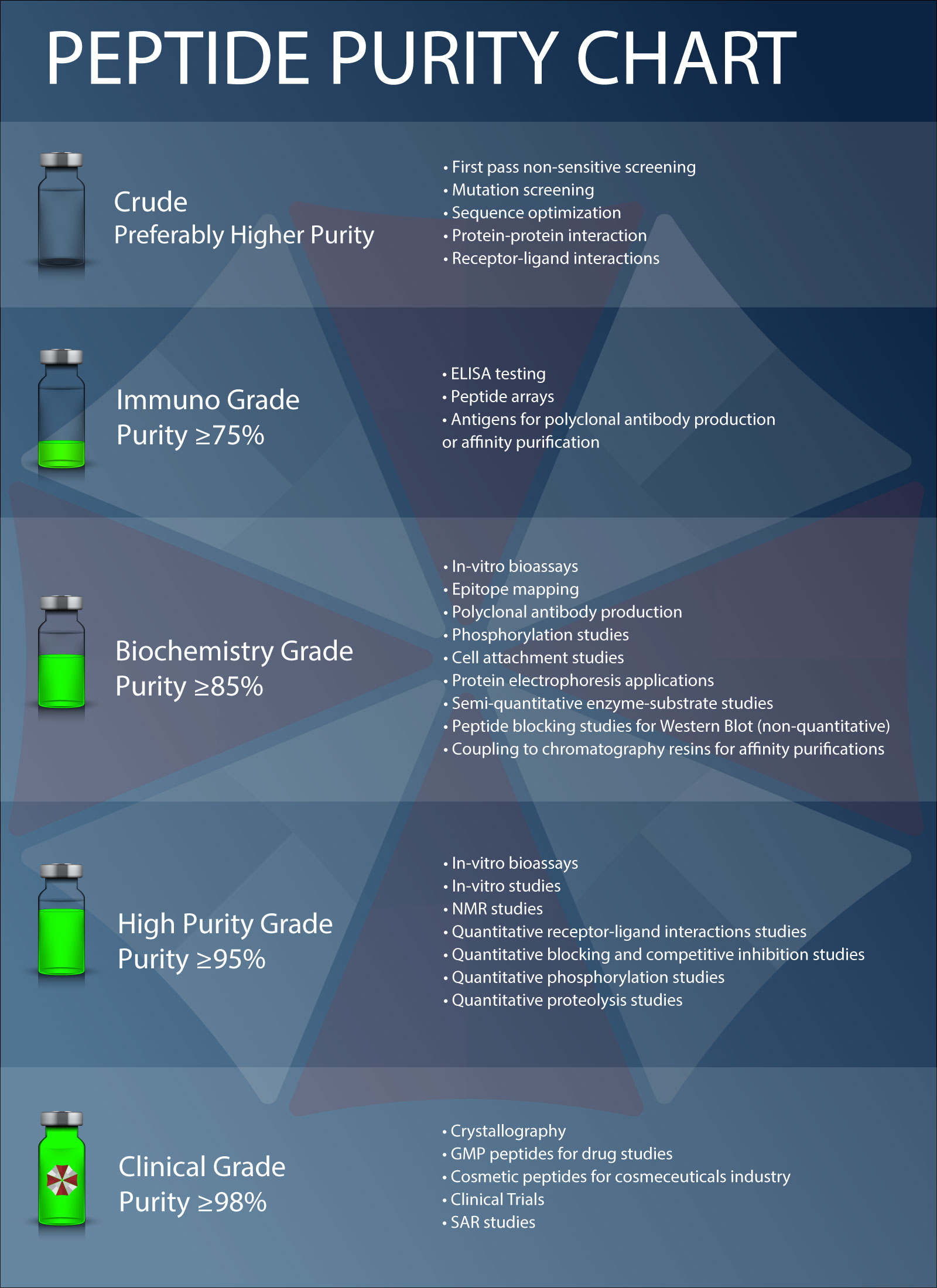
By demanding peptides that include verification of purity and identity, scientists can considerably decrease the risk of experimental artefacts. On the other hand, making use of peptides that have passed third-party lab validation helps ensure that the observed speculative effects are really because of the designated peptide and not as a result of pollutants or errors. When you see peptides marketed as "research-grade," it describes their planned usage and the level of making oversight. Research-grade peptides are created research laboratory study usage only-- they are Research Chemicals not produced under pharmaceutical GMP criteria and are not suggested for usage as therapies or in humans. These peptides come with a basic quality control package, generally consisting of HPLC pureness evaluation and MS confirmation of identification, guaranteeing they meet clinical requirements for pureness and make-up.Recap: What A Research-grade Coa Ought To Include
Choosing the appropriate outside research laboratory for peptide screening involves assessing several elements. A trusted lab must have demonstrable experience in peptide chemistry evaluation-- as an example, PhD-level chemists or biochemists on personnel who recognize peptides' synthesis and deterioration pathways. Certification by appropriate bodies (such as ISO/IEC or qualification for GLP/GMP compliance) is a strong indication of high quality.- Needed for measurable research studies, architectural biology, in vivo study models, and any application where also percentages of impurity can impact outcomes.
- Peak's Exactly how to Read a Peptide COA overview goes through this process step by step.
- Mass spectrometry gauges the molecular weight of a compound with extreme accuracy.
- The key logical approaches for peptides include fluid chromatography (LC), usually HPLC, incorporated with mass spectrometry (MS) for precise molecular weight determination and series recognition.
- Preserving a high level of pureness is crucial due to the fact that impurities can impact bioassays or reactions.
Where Can I Acquire Lab Checked Peptides?
The gold criterion for measuring peptide pureness is high-performance fluid chromatography, widely abbreviated as HPLC. If you see a purity percent on a peptide item, it likely came from an HPLC analysis. This matters because peptides are constructed one amino acid at a time through solid-phase peptide synthesis (SPPS). At each action, there's a small chance that something fails-- an amino acid does not connect, the wrong modification takes place, or a side response creates an unplanned result. Over a chain of 10, 20, or 40 amino acids, those little per-step error rates compound.
Peptide testing is the set of logical checks made use of to evaluate a peptide example before it is made use of in a research operations. In useful COA review, the term usually refers to purity screening, identification screening, and documentation review. Pureness testing asks just how much of the detected sample is the major peptide versus relevant pollutants. Identity testing asks whether the gauged mass or sequence-related evidence matches the desired peptide. Documentation review asks whether the report is batch-specific, traceable, and detailed sufficient to be examined. Peptide testing is the logical procedure made use of to validate that a study peptide is both pure and correctly identified.It's possible to have a peptide that is, claim, 95% pure by HPLC and yet the internet peptide content is something like 70% of the powder's weight (the rest being water and salts). Do not be alarmed-- this is regular and is normally determined by different evaluations (like amino acid analysis). Peptide purity is most typically established by high-performance fluid chromatography (HPLC) with a Certificate of Analysis discovery wavelength of 220 nm, which is optimal for identifying peptide bonds. This method separates peptides from pollutants and measures both target peptides and contaminants, guaranteeing premium samples for research. These can be especially troublesome since their chromatographic behavior is really comparable to the target peptide, making them harder to separate during purification. When a peptide is 98% pure, that continuing to be 2% isn't random sound-- it's specific, identifiable sorts of byproducts. Mass spectrometry measures the molecular weight of a substance with severe accuracy. For peptides, the most typical techniques are electrospray ionization (ESI-MS) and matrix-assisted laser desorption/ionization time-of-flight (MALDI-TOF). HPLC divides a combination into its individual components based on just how each particle engages with a specially created column.